
Austroads Updates Roadside Design Guidance for Safety Barriers
October 10, 2026
Nighttime Guardrail Visibility: Why Continuity Matters
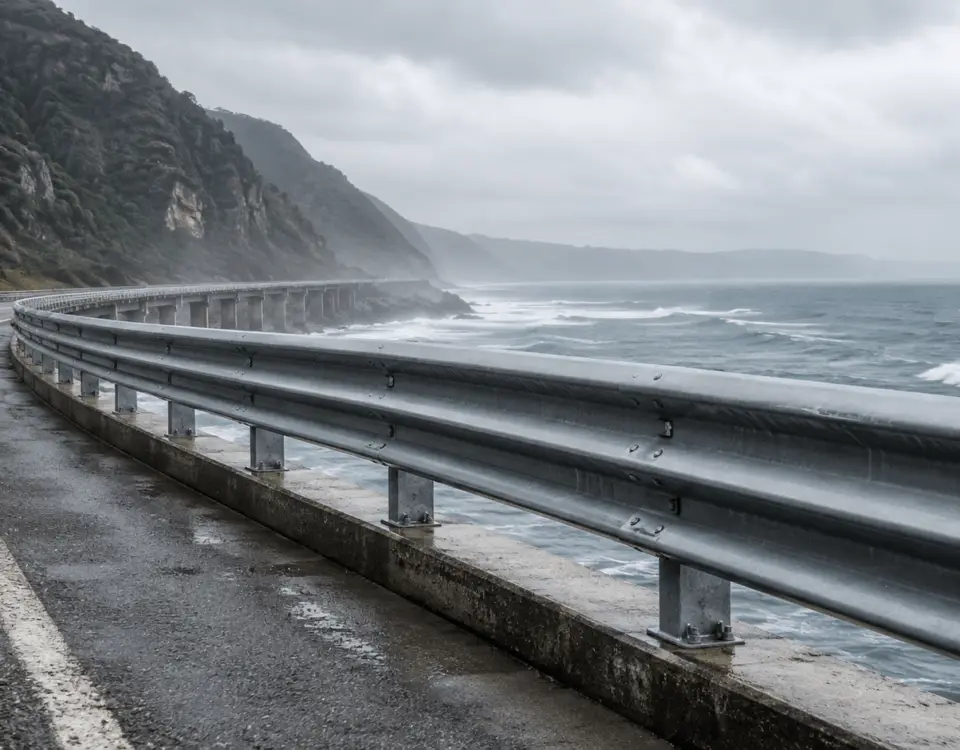
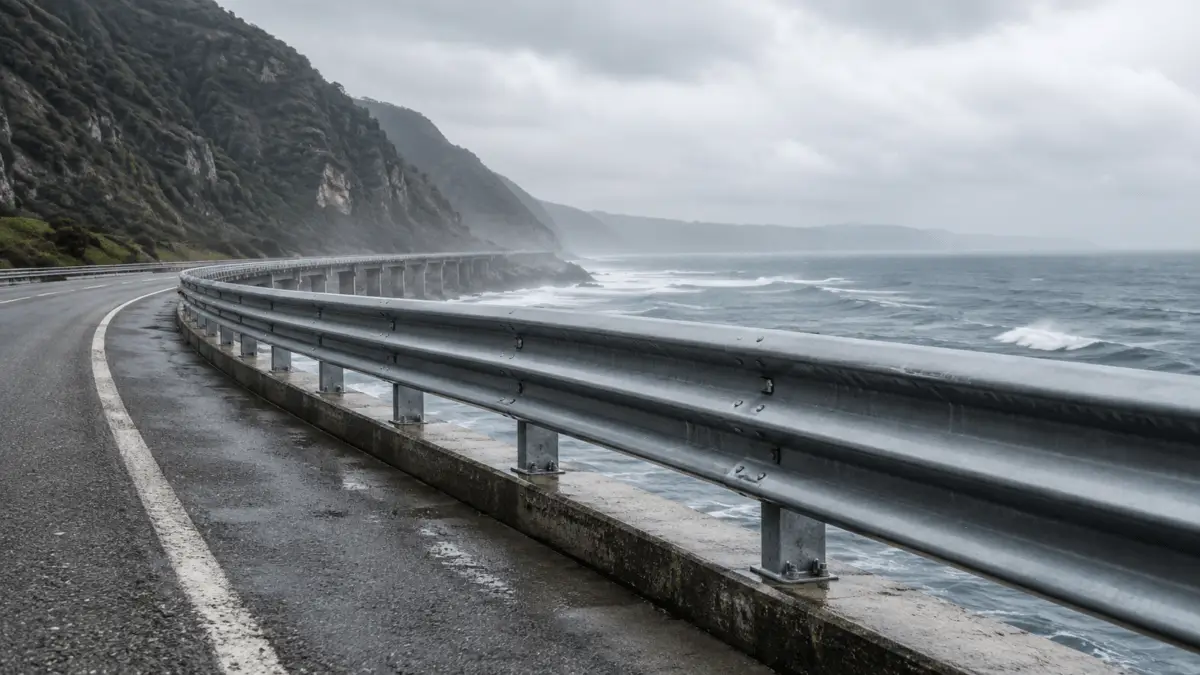
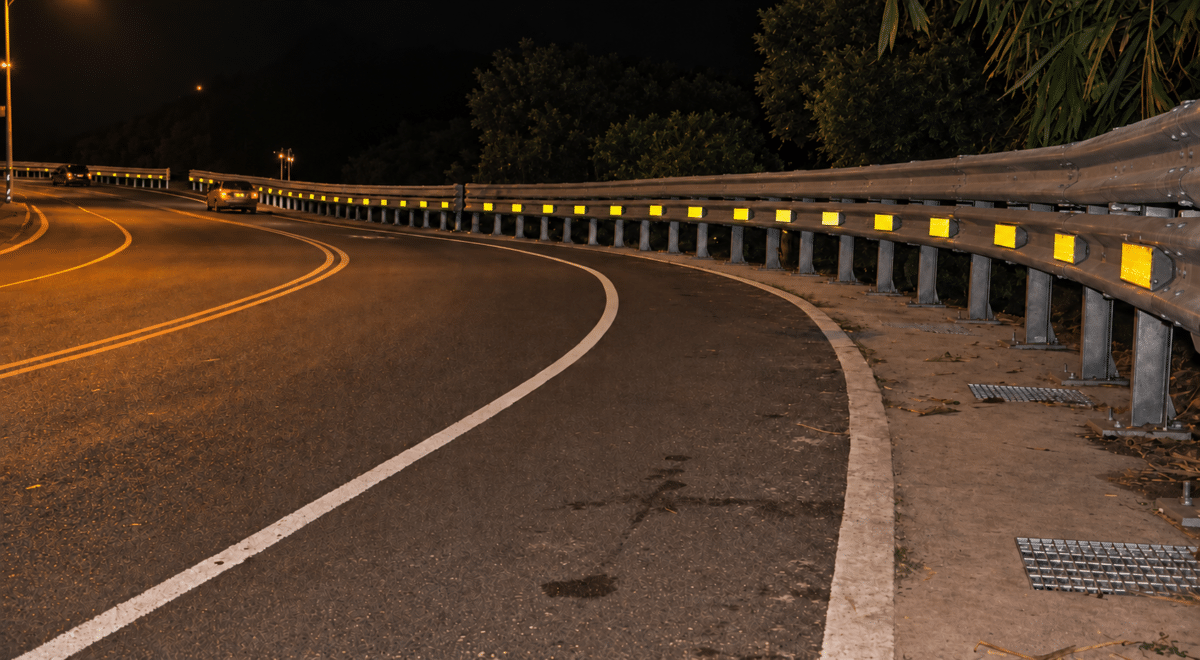
Nighttime road safety is not simply a question of whether a guardrail is bright enough. Drivers need to read the road alignment, lane edges and roadside hazards in time. Retroreflective devices on a barrier help identify the barrier and may support drivers in reading the road alignment. They work as part of a broader guidance system that includes pavement markings, curve delineation and, where provided, roadway lighting; they do not replace those elements.
A Visible Barrier Also Helps Drivers Read the Road
On unlit roads, drivers rely more heavily on headlamps, pavement markings and retroreflective devices to interpret the road ahead. The Federal Highway Administration (FHWA) notes that roadside barriers may be difficult for drivers to see at night. Delineating a barrier can make its presence clearer and provide information about roadway alignment. FHWA: Delineation on Barriers
For that reason, nighttime visibility should not be judged by the brightness of a single reflector alone. The continuity of the visual guidance is also important. Curves, guardrail terminals and barrier transition sections, as well as changes in roadway alignment, warrant particular attention. Missing or interrupted delineation at these locations may make it harder for drivers to recognize how the road edge changes.
Identify the Problem Before Adding Devices
When a nighttime visibility problem is reported, first review the pavement markings, curve warning signs, guardrail and its delineators, roadway lighting, and possible vegetation obstruction. Then determine whether the issue is poor legibility of the road alignment, low conspicuity of the barrier, or a local discontinuity caused by obstruction or damage. FHWA lists pavement markings, delineators, reflective signs and other treatments among the options for improving curve delineation. The appropriate combination depends on site conditions; one treatment should not be assumed suitable for every road. FHWA: Enhanced Delineation for Horizontal Curves
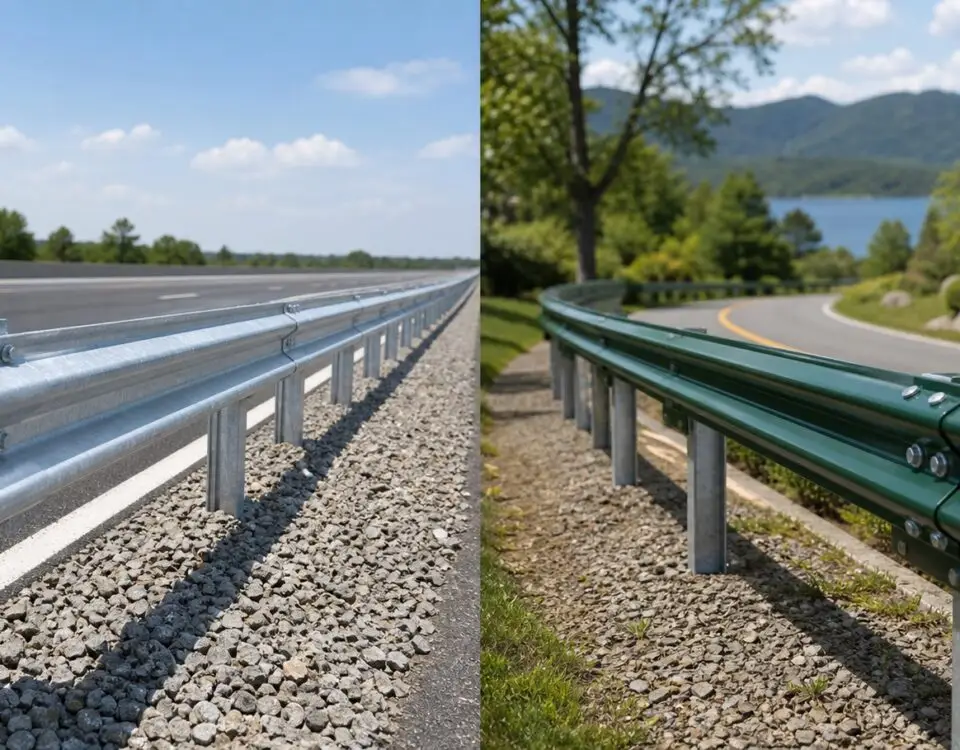
Suppliers providing guardrails or delineation components should confirm compatibility with the existing barrier system, the proposed mounting location and the project requirements. Do not add metal attachments at rail-to-post connections, alter connections or drill into the barrier simply to make it more conspicuous. FHWA cautions that some metal delineators installed at the bolt connecting the rail to the post can interfere with guardrail performance in a crash. Any change affecting the barrier structure or connection should be reviewed by the project designer and road authority. FHWA: Delineation on Barriers
Maintenance: Night Inspections, Cleaning and Vegetation Control
Nighttime visibility should not be checked only at installation. Road maintenance teams should include night inspections in their maintenance program, paying particular attention to curves, guardrail terminals, transition sections and locations where trees or shrubs grow quickly. Check whether delineators are obscured by dirt, faded, loose, damaged or missing, and trim roadside vegetation that blocks the barrier profile, delineators or drivers’ sight lines. FHWA guidance on horizontal-curve maintenance also recommends periodic inspections and vegetation control where growth obstructs visibility. FHWA: Sign Maintenance
After snow or rain, after roadworks, or following a vehicle impact to the barrier, conduct a timely follow-up inspection. Check that delineators are not obscured by mud and that the rail, posts and connections are not loose, deformed or damaged. Clean, repair or replace affected components as appropriate. Structural damage requires assessment in accordance with the project requirements; a makeshift field repair is not a substitute for that assessment. FHWA’s W-beam guardrail repair guide addresses damage inspection and repair. Inspection frequency should follow the local maintenance program and site risk rather than an assumed universal interval. FHWA: W-Beam Guardrail Repair Guide
What This Means for Road Projects
A guardrail that is visible at night is part of a wider question: can drivers follow the road alignment, identify the lane edge and recognize the roadside barrier in time? For new and upgraded roads, review pavement markings, curve delineation and barrier delineation together. On existing roads, first check for obstruction, missing or damaged delineators, breaks in the visual guidance and impact damage; then determine whether additional or revised delineation is warranted. For suppliers, product compatibility and clear technical documentation matter, but the final configuration must meet local requirements and receive the necessary project approvals.
Scope Note
This article draws on public technical guidance from the U.S. Federal Highway Administration. It presents general industry considerations and does not replace local design standards, road-authority requirements or project-specific engineering assessment.