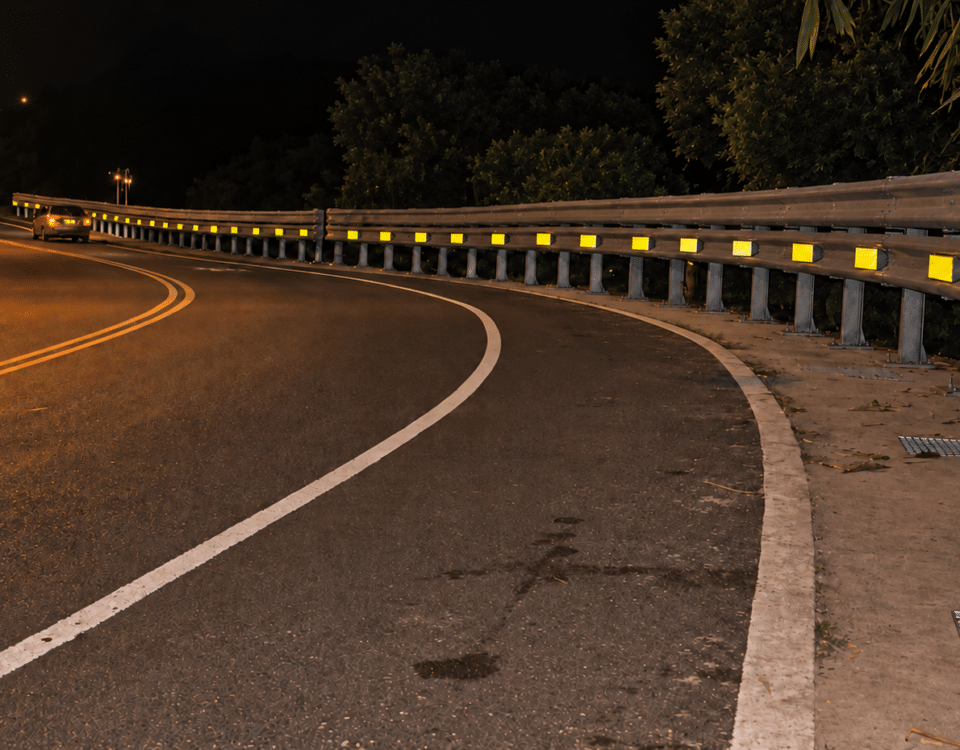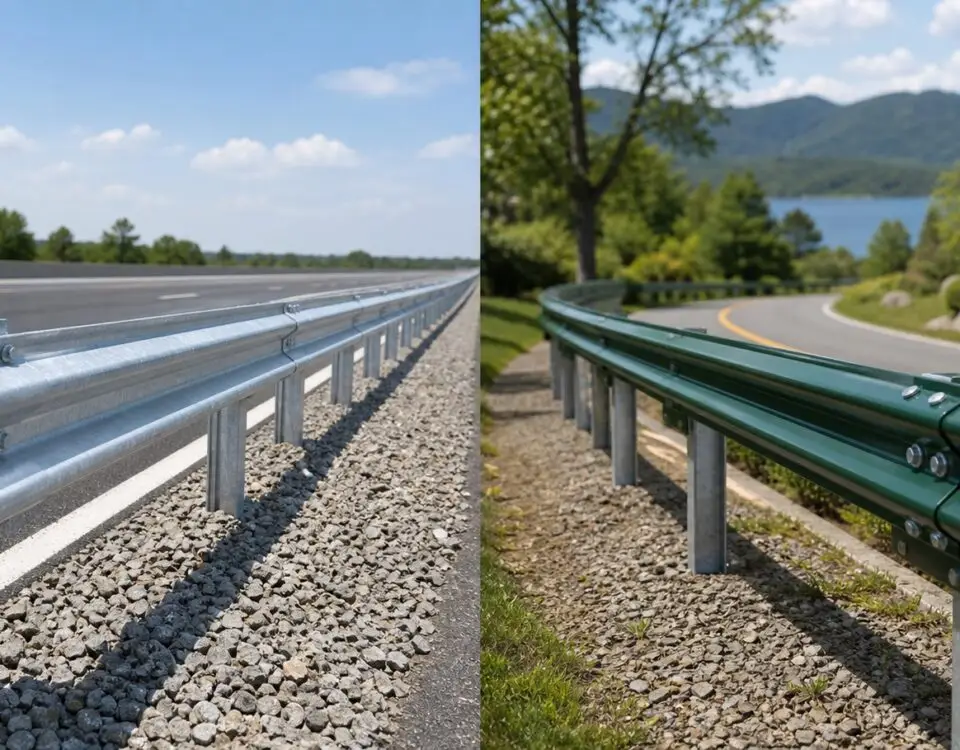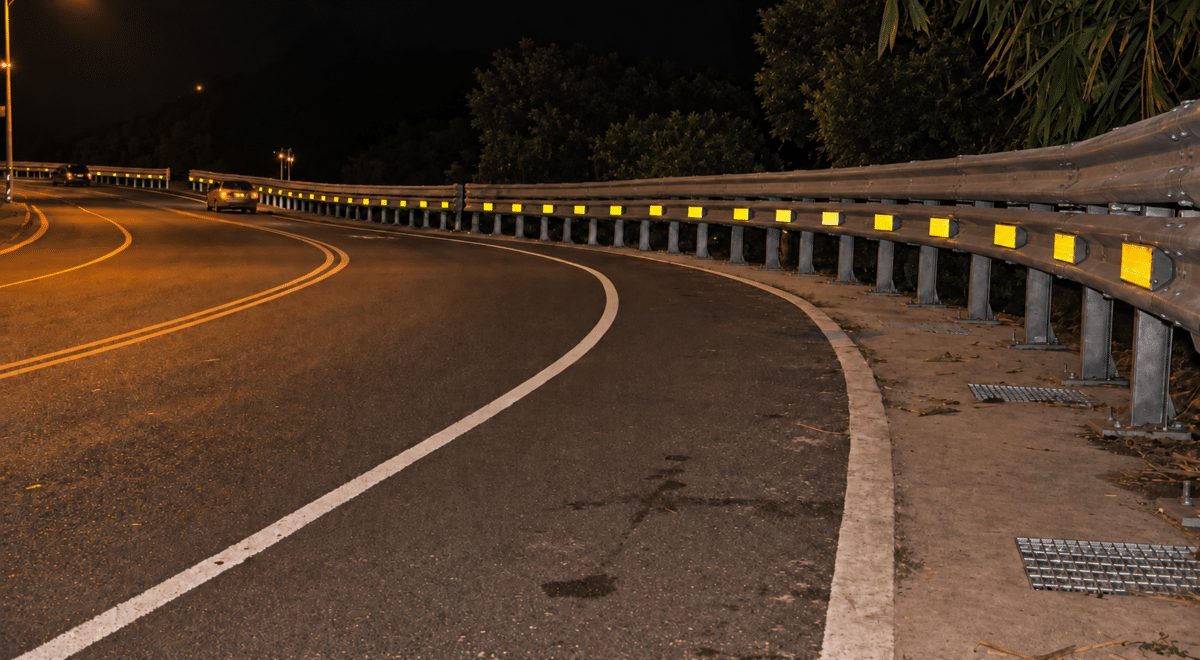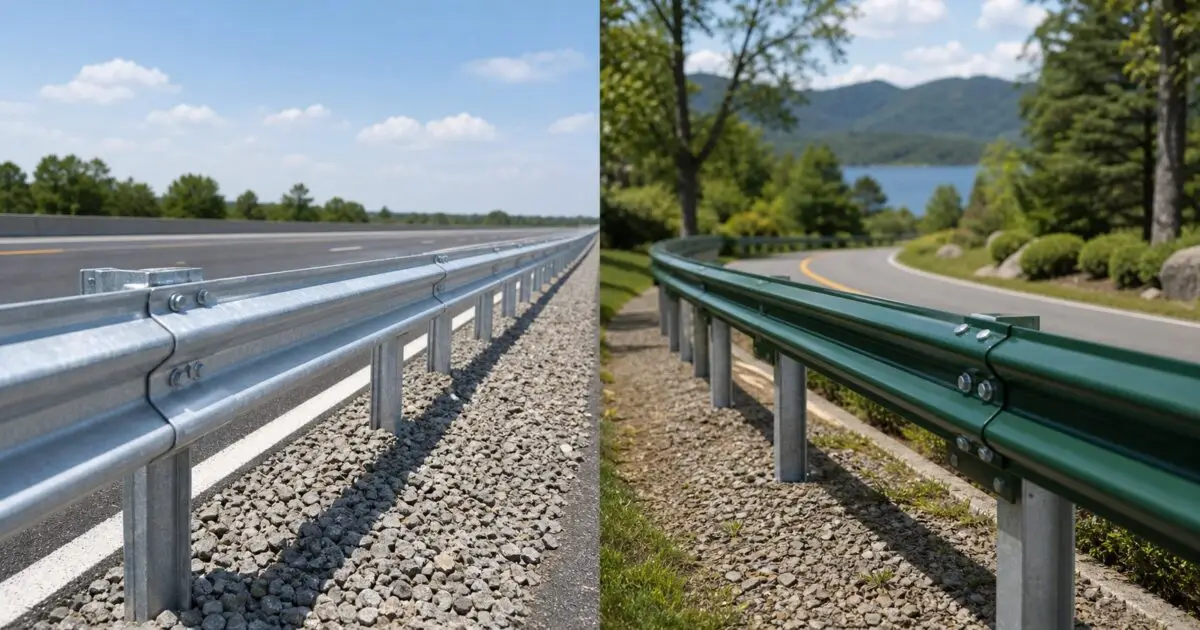
W-Beam vs Thrie-Beam Guardrail
June 14, 2026
China guardrail specifications
June 24, 2026
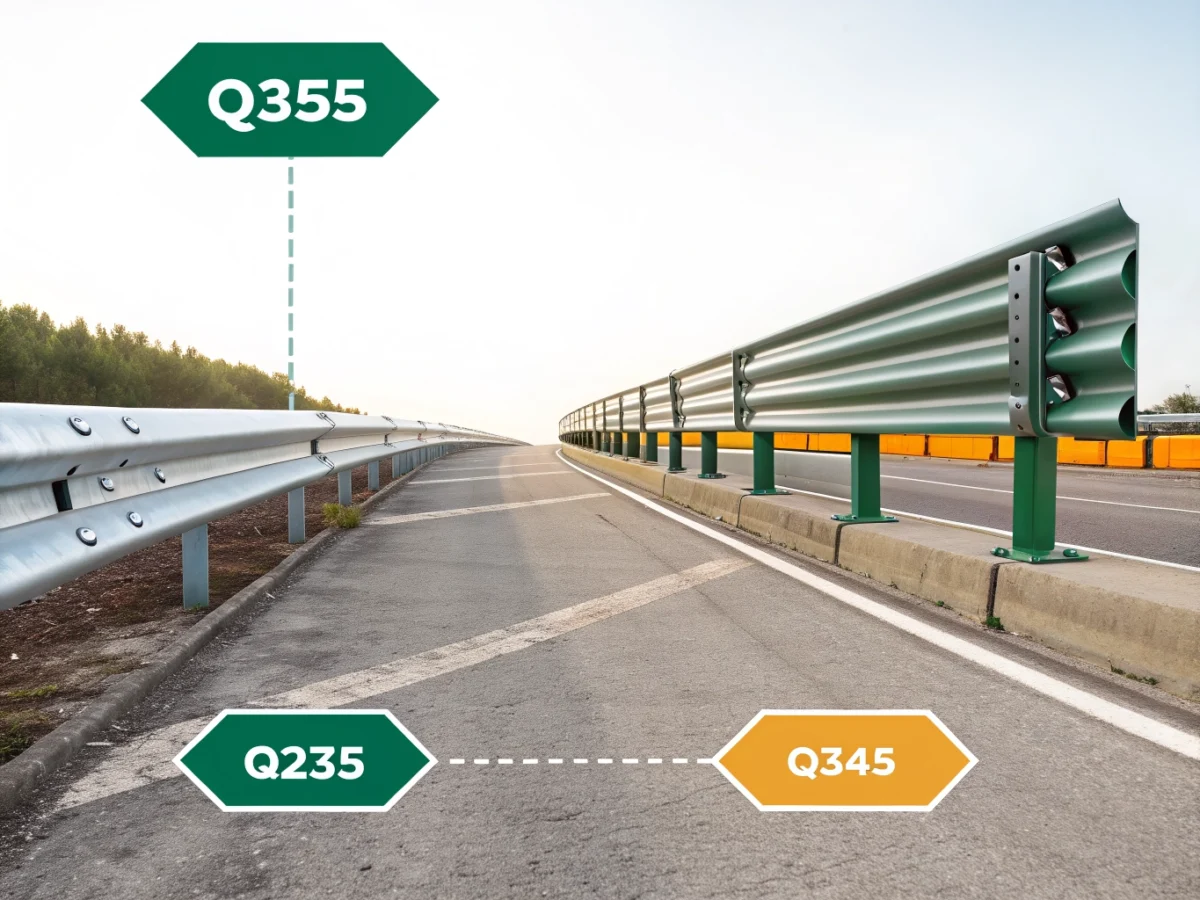
When evaluating highway guardrail systems, much of the buyer's attention naturally goes to coating type, beam profile, or post spacing. Yet one of the most consequential decisions happens earlier in the process: the choice of steel grade. In the Chinese steel classification system, two grades dominate guardrail manufacturing — Q235 and Q345 (now Q355 under the current standard). Understanding the difference between them helps buyers ask better questions, compare quotations more accurately, and assess whether a supplier's specifications meet the performance level a project requires.
What Is Q235 Steel?
Q235 is a carbon structural steel produced under the Chinese national standard GB/T 700. The "Q" is the initial letter of the Hanyu Pinyin "Qu," the first character of the Chinese term for "yield strength (ASTM steel standards)" (Qufu Qiangdu). In everyday usage, this is sometimes loosely described as the "yield point" (Qufu Dian), though strictly the two terms refer to related but distinct concepts: yield point is a point on the stress-strain curve, while yield strength is the stress value at that point. "235" indicates a minimum yield strength of 235 MPa for plate thickness up to 16 mm. Its tensile strength typically falls in the range of 370–500 MPa.
Q235 is a low-carbon, low-alloy steel valued for its excellent weldability, good ductility, and ease of cold forming — all important qualities for roll-forming guardrail beams into their characteristic wave profiles. It is also widely available and relatively economical, which is one reason it has become a baseline material in many guardrail product lines.
What Is Q345 (Now Q355) Steel?
Q345 was the designation for this grade under the Chinese national standard GB/T 1591. Following the 2018 revision (GB/T 1591-2018 superseding GB/T 1591-2008), the Q345 series was officially renamed to the Q355 series, with the minimum yield strength correspondingly raised to 355 MPa (for thickness up to 16 mm). "Q345" remains in widespread industry use as a legacy or colloquial name, but under the current standard, mill certificates should reference Q355. Buyers who see "Q345" on a supplier's test report or mill certificate should confirm which standard version it refers to.
Q345/Q355 belongs to a different category: low-alloy high-strength structural steel, governed by GB/T 1591-2018. It contains small additions of alloying elements such as manganese, silicon, and in some variants niobium, vanadium, or titanium, which refine the steel's grain structure and increase strength without a major loss of toughness.
Under the current standard, the minimum yield strength for this grade is 355 MPa (for thickness up to 16 mm, decreasing slightly for thicker sections), with tensile strength generally ranging from 470–630 MPa. The grade is produced in several toughness subgrades — A through E — which differ primarily in their impact toughness requirements and the temperatures at which that toughness is guaranteed, an important consideration for guardrails installed in regions with cold winters.
Comparing the Two Grades

Why the Difference Matters for Guardrail Performance
A guardrail's job is to absorb and redirect impact energy from an errant vehicle, deforming in a controlled way without fracturing or detaching from its posts. The steel grade influences this behavior in a few practical ways:
Strength-to-thickness ratio. Because Q345/Q355 has a higher yield strength, a component made from it can sometimes achieve the same load-bearing capacity at a slightly reduced thickness compared to an equivalent Q235 component. This can translate into material savings on large orders, though the savings need to be weighed against its higher per-ton price.
Energy absorption and ductility. Q235's high ductility allows it to deform significantly before failure, which is desirable in barrier systems designed to absorb impact gradually. Q345/Q355, while still ductile, behaves somewhat more rigidly — useful where higher containment levels or stiffer post performance are specified.
Cold-climate performance. For projects in regions with low winter temperatures, the impact toughness subgrades of Q345/Q355 (particularly the D and E subgrades, which carry low-temperature impact guarantees) can offer an advantage over standard Q235, which is not typically rated for the same low-temperature toughness.
Compatibility with test standards. Guardrail systems tested and certified under standards such as GB/T 31439 (for two-wave and three-wave beams) or EN 1317 (for containment levels and working width in Europe) are evaluated as complete systems — beam, post, and connection hardware together. The steel grade used in each component is part of what determines whether a given configuration passes a particular containment level, so the grade specified in a certificate or test report should match the grade actually supplied.
What This Means for Buyers
Neither grade is universally "better" — they serve different roles depending on the containment level required, local climate, and project budget. For a buyer evaluating quotations, the practical takeaway is this: when comparing two offers, check not just the wall thickness and coating, but also the steel grade specified for each component (beam, post, and bracket can sometimes differ). A lower price paired with a lower steel grade is not necessarily a problem — but it should be a like-for-like comparison, and ideally backed by a mill certificate confirming the grade actually used.
Buyers working on projects that require formal certification — whether to GB/T 31439, EN 1317, or another national standard — should also confirm that the steel grades in the supplier's test report match what will be delivered, and should be aware that Q345 and Q355 refer to the same family of steel under old and new versions of GB/T 1591 — substituting a different actual grade after certification can still affect the validity of the rated performance.
Conclusion
Q235 and Q345/Q355 represent two well-established points on the spectrum of structural steel used in highway safety barriers. Q235 offers cost-effective performance with excellent formability and ductility, suitable for a wide range of standard installations. Q345/Q355 offers higher strength and, in its low-temperature subgrades, improved toughness for demanding environments — at a moderate cost premium. Understanding which grade is specified — and verifying it through documentation — gives buyers a clearer basis for comparing suppliers and for matching a guardrail system to the actual demands of their project.
References:
1,GB/T 700, Carbon Structural Steel — Chinese national standard specifying the chemical composition and mechanical properties of the Q235 series.
2,GB/T 1591-2018, High Strength Low Alloy Structural Steels — current national standard superseding GB/T 1591-2008; this revision renamed the Q345 series to Q355 and adjusted the corresponding yield strength
3,GB/T 1591-2008 (superseded) — earlier standard under which the "Q345" designation originated and which remains in informal industry use..
4,GB/T 31439.1-2015, Highway Guardrail – Part 1: Two-wave Guardrail — specifies dimensions, mechanical properties, and test methods for two-wave guardrail beams.
5,EN 1317 (Parts 1–5), Road Restraint Systems — published by the European Committee for Standardization (CEN); specifies containment levels, working width, and test methods for guardrail systems.
6,ISO 1461, Hot Dip Galvanized Coatings on Fabricated Iron and Steel Articles — Specifications and Test Methods — applicable where galvanized guardrail components are referenced.