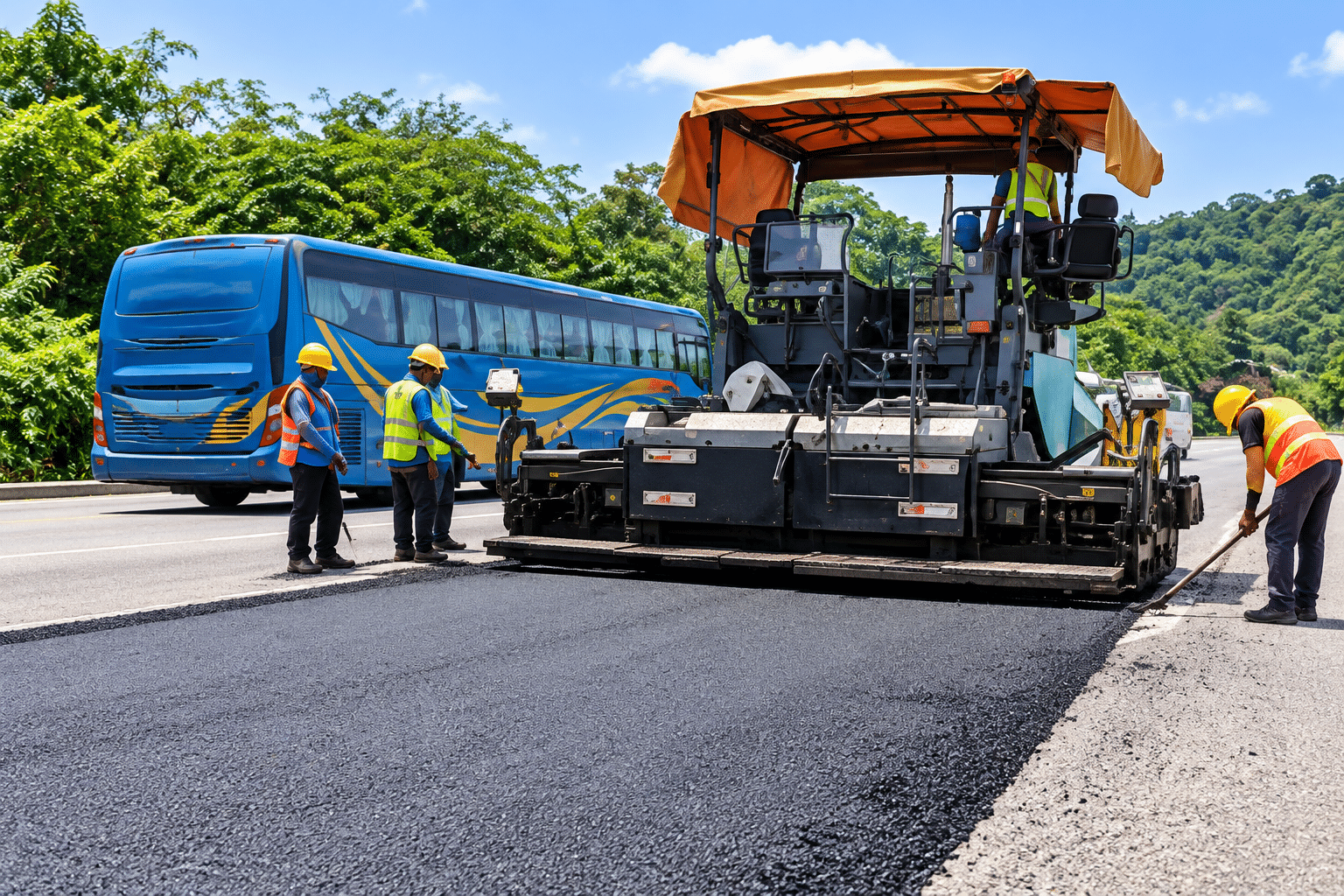
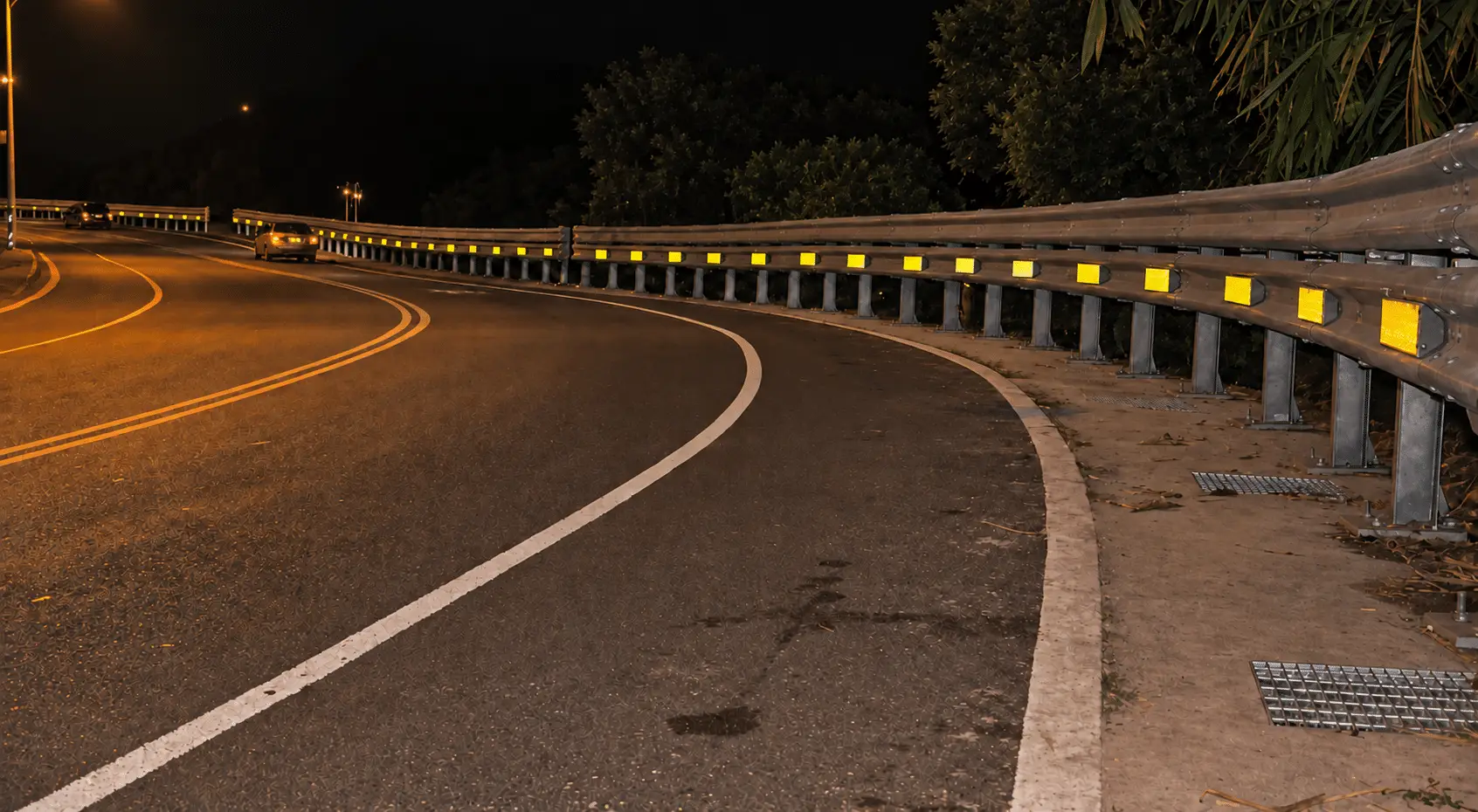
W-Beam Highway
June 13, 2023
Powder-Coated Guardrail
June 15, 2026
Thrie-Beam Guardrail

- Custom Thrie-Beam Components to Client Blueprints
- EN 1317 Certified H2 / H3 Thrie-Beam Barrier
- 550g/m² Hot-Dip Galvanized Thrie Beam
- AASHTO M180 Class B Thrie-Beam Guardrail
- Highway Safety Barrier — Full Range Manufacturer
- Highway Safety Barrier — Full Range Manufacturer


Key Engineering AdvantagesMinimizedMinimized Occupant Injury
As semi-rigid barriers, corrugated guardrails inflict significantly less damage on vehicles and their occupants. They eliminate the severe, instantaneous peak impact force typical of rigid concrete barriers during high-angle collisions.
Rapid Post-Impact Repair & Low Maintenance Costs
Both the beam panels and posts are highly standardized components. Following a collision, maintenance crews only need to replace the localized damaged sections rather than reconstructing the entire system — significantly reducing repair time and labor costs. This modularity is exceptionally valuable for optimizing highway maintenance budgets, especially for cost-sensitive infrastructure projects and regions with limited maintenance resources.
Lightweight Design & Cost-Effective Logistics
Taking a standard W-beam panel as an example, a 4-meter panel weighs approximately 48 kg at a 3mmthickness, and about 66 kg at a 4mm thickness—vastly lighter than a concrete barrier of equivalent protective length. This lightweight profile drastically reduces container shipping costs and simplifies on-site installation.
Highly Adaptable Specifications & Full-Spectrum Protection
By adjusting key parameters—such as plate thickness, wave profile (W-beam vs. Thrie-beam), post cross-sections, and spacing—corrugated guardrails can be engineered to cover containment levels from Level 2 all the way to Level 6. This versatility makes them ideal for any scenario, from rural county roads to high-speed expressways.

Components (Thrie-beam):
1—Thrie-beam panel;2—Thrie-beam backup plate (H-section posts only);3-post;4—end teminal;5—splice boltassembly;6—connecting bolt assembly;7—reinforcing rail;8—blockout orbracket.
 Thrie-Beam Guardrail — Product Manual