
Motorcycle-Friendly Guardrails on Ordinary Roads: Reducing Secondary Injuries on High-Motorcycle-Traffic Routes
October 1, 2026
Electric Vehicles and Guardrail Compatibility: What Full-Scale Crash Tests Show
October 7, 2026
Road Resurfacing and Guardrail Performance: When to Reassess the Existing System
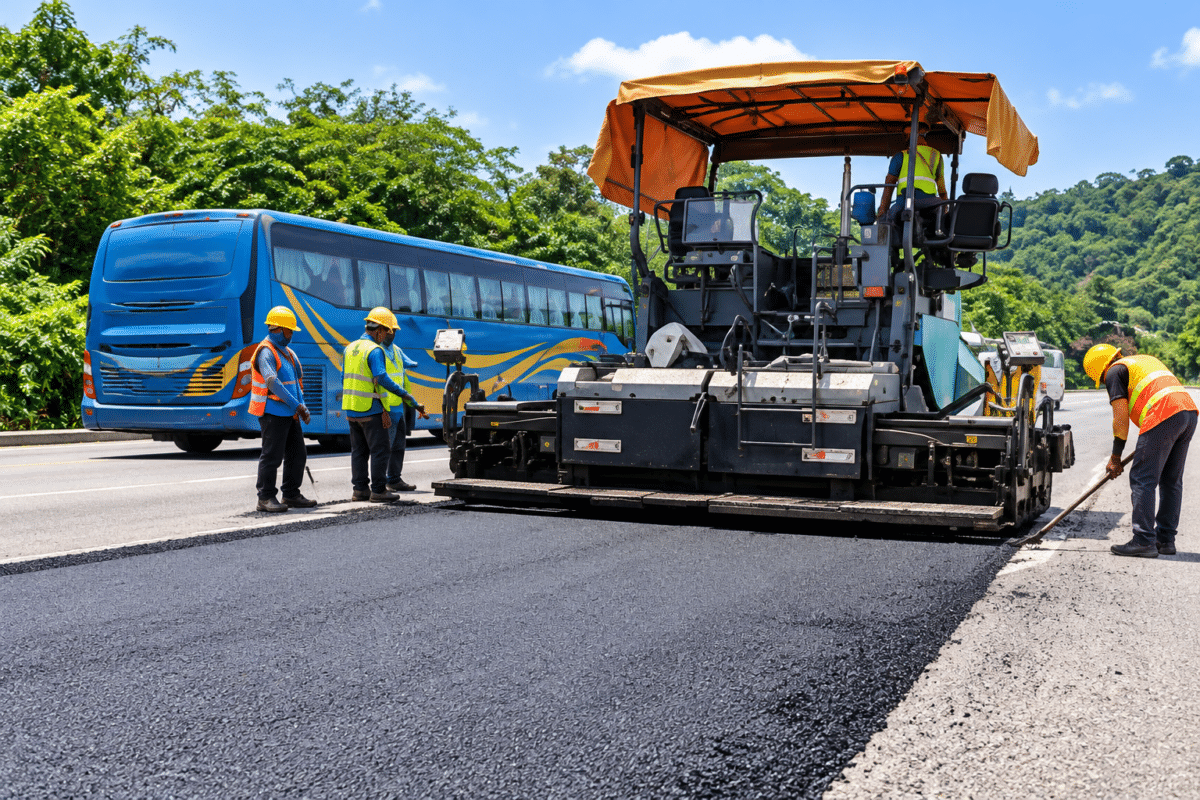
Road resurfacing changes more than the pavement surface. It can also change the effective height relationship between an existing safety barrier and road users. New Zealand Transport Agency Waka Kotahi’s M23 specification requires the specified system height to be maintained within a tolerance of -0 mm to +20 mm. The finished pavement level—including surface layers and overlays—must be taken into account.
Why posts and their support conditions matter
If resurfacing leaves the barrier lower relative to the finished road, the review should not stop at measuring the rail. Posts, embedment, foundations and the supporting roadbed all affect whether the existing system remains consistent with its approved configuration.
M23 does not provide one universal method for raising or strengthening posts across all barrier systems. Site welding, adding steel plates or changing connections should not be treated as standard fixes. Depending on the existing system and site conditions, the design team may need to assess resetting or replacing posts and connections, strengthening the foundation or roadbed, or reconstructing the affected section. The project designer and road authority should confirm the selected solution.
Reassess the complete barrier system
After paving work, clean asphalt residue, soil and construction debris from the rails, posts, connections and surrounding areas before inspection. Then check the final pavement level and barrier height, followed by the posts and their embedment, connections, terminals, transitions, foundations and roadbed. Cleaning helps expose visible damage or loose connections; it does not replace dimensional or engineering checks.
The practical takeaway is simple: treat resurfacing as a trigger to reassess the existing barrier system. Confirm the rail height against the finished road, then assess the posts, foundations and roadbed as one support system. Raising the rail alone may leave the supporting conditions unresolved.
Reference
Waka Kotahi NZ Transport Agency, M23: Specification and Guidelines for Road Safety Hardware